
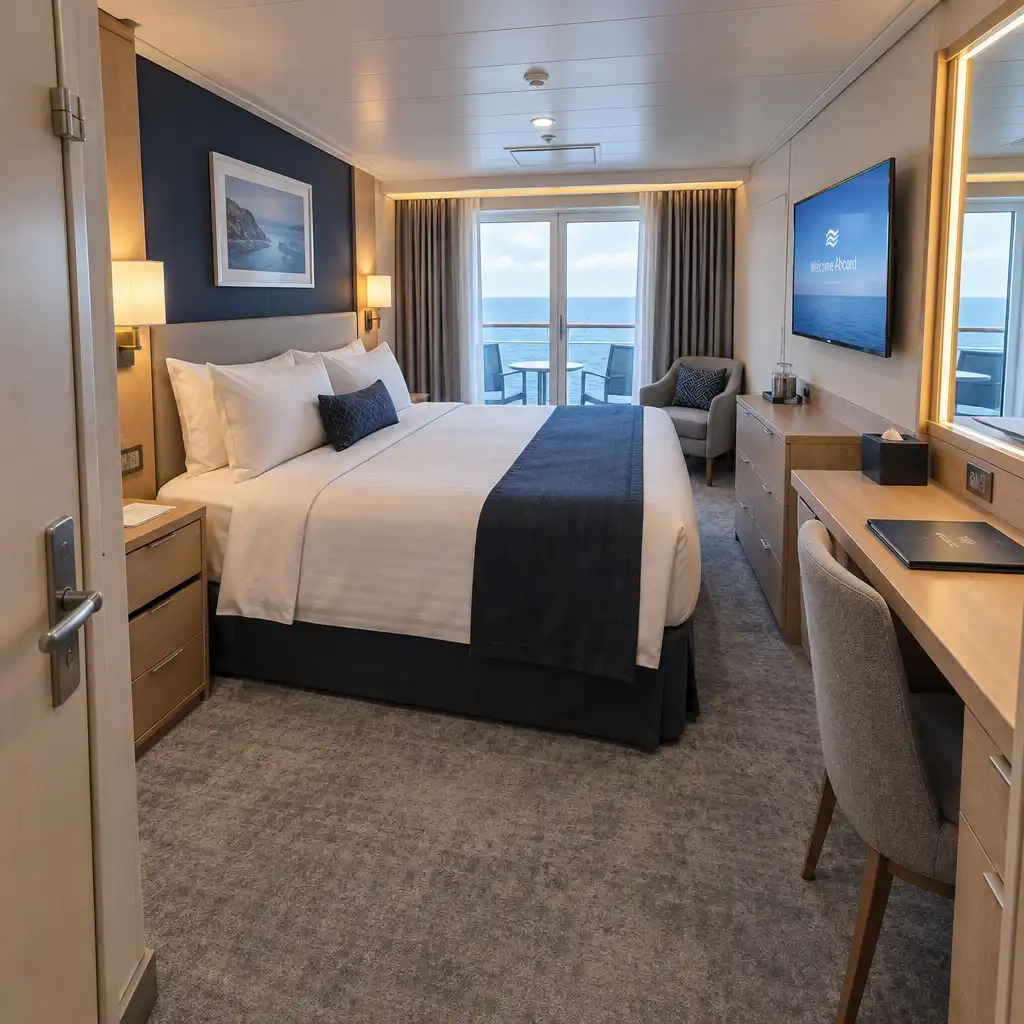
Modern interior cruise cabin with a neatly made queen bed, warm ambient lighting, a small desk with mirror, and a flat-screen TV

Interior Cabins

Interior Cabins: The Smart Choice for Savvy Cruisers

An interior cabin, also called an inside stateroom, is a cruise ship accommodation without a window or balcony. It offers a comfortable, well-designed space for sleeping and relaxing, often at a significantly lower price than ocean view or balcony cabins.

Typically located on lower decks and interior corridors, these cabins range from about 14 to 20 square metres depending on the ship. Modern ships use clever lighting, mirrors, and virtual balconies to create a sense of space. Interior cabins are ideal for travellers who prioritise value, spend most of their time exploring the ship and ports, and simply need a quiet, comfortable place to sleep and recharge.

What to Expect Inside

What to Expect Inside

Clever Use of Space

Interior cabins are designed to maximise every square metre. Expect a comfortable bed (often convertible to twins), a compact bathroom with shower, a small desk or vanity, and efficient storage solutions like under-bed drawers and wall-mounted shelves.

  • Beds may be arranged as twin or queen configurations.
  • Bathrooms are typically compact but functional with modern fixtures.
  • Storage includes a wardrobe, drawers, and sometimes overhead bins.
Technology and Comfort

Modern interior cabins often include a flat-screen TV, climate control, and sometimes a 'virtual balcony' — a floor-to-ceiling LED screen displaying real-time ocean views. Ambient lighting options help simulate natural light cycles.

  • Virtual balconies are available on select Royal Caribbean ships.
  • LED lighting can be adjusted to mimic sunrise and sunset.
  • USB charging ports and international outlets are common.

Design and Atmosphere

Interior cabins are decorated in light, neutral tones to create a sense of openness. Mirrors are strategically placed to reflect light, and the overall design is calm and restful, avoiding clutter.

  • Colour palettes are usually light and airy.
  • Mirrors help expand the perceived space.
  • The atmosphere is intentionally quiet and dark for better sleep.

The Advantages of Going Interior

The Advantages of Going Interior

  • Budget-Friendly Value: Interior cabins are typically the most affordable option on a cruise, allowing travellers to allocate more of their budget to shore excursions, speciality dining, and onboard experiences. Savings can be substantial, especially on longer voyages, and lower cost makes cruising accessible to more travellers.
  • Better Sleep Environment: The absence of natural light can be a surprising advantage: interior cabins are pitch dark at night, which many guests find conducive to deep, uninterrupted sleep. Darkness promotes melatonin production, and there is no early morning sunlight to wake you. This is ideal for napping after a long port day.
  • Encourages Exploration: Without a private balcony or view to linger over, guests in interior cabins tend to spend more time in public areas, socialising, enjoying entertainment, and making the most of the ship's facilities. This encourages a more active cruise experience and a greater likelihood of meeting fellow travellers.
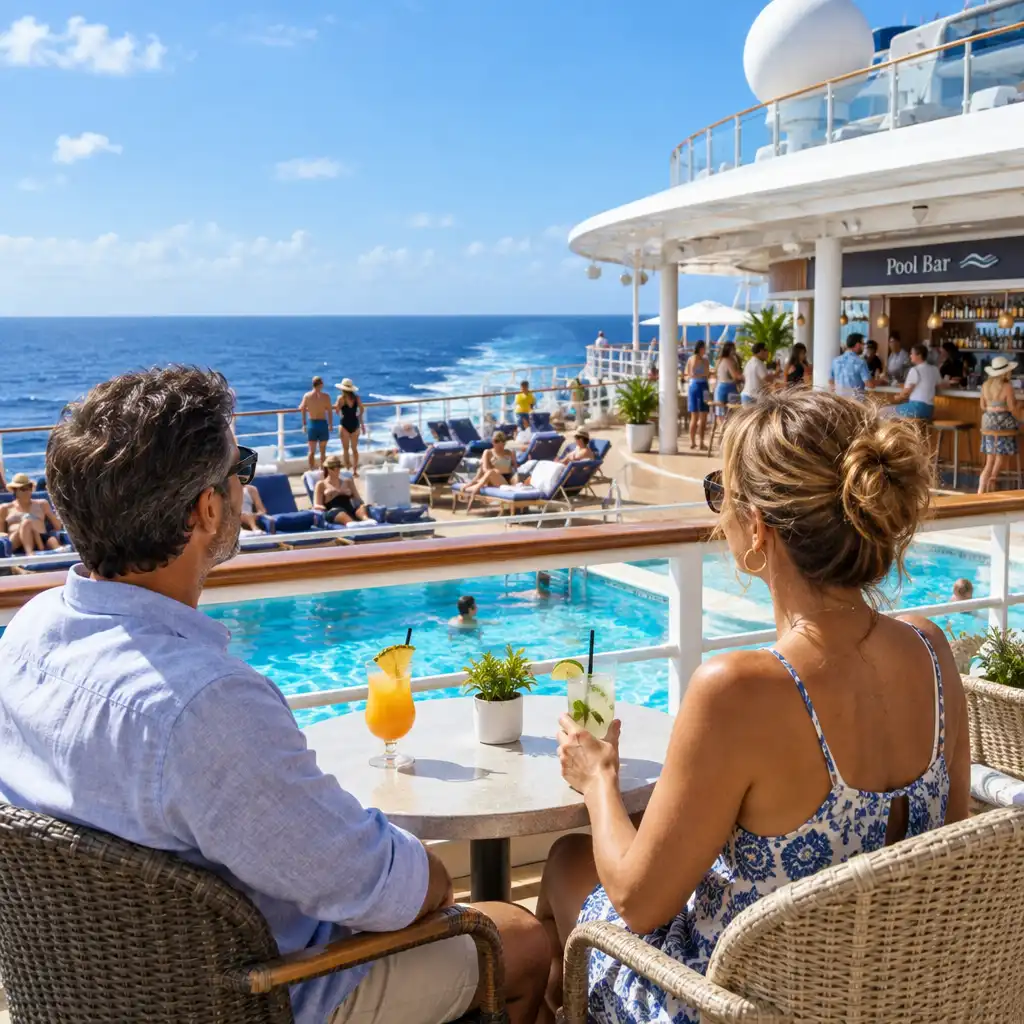
Couple enjoying a sunny cruise ship public deck with a pool and ocean view
Interior cabin guests often spend more time enjoying the ship's public spaces.

The Limitations to Consider

The Limitations to Consider

Lack of Natural Light

The most obvious limitation is the absence of a window or balcony, which can make the cabin feel smaller and more enclosed. Some travellers may find this claustrophobic, especially on longer cruises. There is no view of the ocean or ports, and it can feel cramped for those used to natural light. Virtual balconies help but are not a true substitute.

Limited Sense of Space

Interior cabins are generally smaller than ocean view or balcony cabins, which can be challenging for travellers with a lot of luggage or those who prefer to spend time in their room. The average size is 14-20 square metres, storage is efficient but limited, and the space may feel cramped for more than two guests.

Potential for Noise

Depending on location, interior cabins may be near crew areas, elevators, or machinery, which can result in more ambient noise. Lower decks may be closer to engine rooms, and cabins near elevators can have foot traffic noise. Researching deck plans can help avoid noisy areas.

Is an Interior Cabin Right for You?

Is an Interior Cabin Right for You?

Use this quick reference to see how interior cabins align with different traveller profiles. The matrix considers budget, space needs, and onboard habits.

Traveller Type Suitability Notes
Budget-conscious travellers Excellent fit Lowest cost allows more spending on excursions and dining.
Social cruisers who spend little time in the cabin Great fit Cabin is primarily for sleeping and refreshing.
Families with young children Can work Space may be tight; look for cabins with pull-down bunks.
Travellers who value a private balcony Not recommended No outdoor space or natural light; consider a balcony cabin.
Light sleepers who prefer darkness Excellent fit Pitch-dark environment supports deep, uninterrupted sleep.
Those prone to claustrophobia May want to consider ocean view A window or porthole can provide a greater sense of openness.

Making the Most of Your Interior Cabin

Making the Most of Your Interior Cabin

  1. Bring a small nightlight or use the bathroom light as a soft glow to avoid total darkness when moving around at night.
  2. Use the TV's ambient channel or a virtual balcony if available to simulate a view and natural light cycles.
  3. Keep the cabin tidy to maximise perceived space; utilise all storage compartments and keep surfaces clear.
  4. Spend time in public areas with natural light during the day, such as lounges, pool decks, and observation lounges.
  5. Consider a cabin on a higher deck to reduce potential noise from lower machinery or high-traffic areas.

Interior vs. Ocean View: A Quick Comparison

Interior vs. Ocean View: A Quick Comparison

Interior Cabin

  • No window or balcony
  • Typically the lowest-priced category
  • Pitch dark at night, which can improve sleep
  • Generally smaller, around 14-20 square metres
  • Encourages use of public spaces

Ocean View Cabin

  • Has a window or porthole
  • Typically 10-20% more expensive
  • Natural light throughout the day
  • May be slightly larger
  • Provides a view of the ocean or ports

Interior Cabins on Different Cruise Lines

Interior Cabins on Different Cruise Lines

While the core concept is the same, cruise lines differentiate their interior cabins through design, technology, and amenities. Some offer virtual balconies, others focus on efficient storage or unique lighting.

  • Royal Caribbean offers virtual balcony cabins that display real-time ocean views on a floor-to-ceiling LED screen.
  • Celebrity Cruises provides stylish, modern interiors with thoughtful touches and contemporary design.
  • Carnival Cruise Line has family-friendly interior options with extra bunks and flexible sleeping arrangements.
  • Norwegian Cruise Line offers studios designed specifically for solo travellers, with smart use of space.

Frequently Asked Questions About Interior Cabins

Frequently Asked Questions About Interior Cabins

Ready to Explore Cabin Options?

Ready to Explore Cabin Options?

Now that you understand interior cabins, explore other cabin categories to find the perfect fit for your cruise. Our guides cover ocean view cabins, balcony cabins, and suites, with detailed comparisons and tips.

Editorial Note

Editorial Note

This guide is based on general industry knowledge and is intended for informational purposes only. Cabin features and availability vary by ship and cruise line. Always check with your cruise line or travel agent for the most current details. Published by CARZONE GROUP editorial team. Last updated: March 2025.