Cabin Guide

Choose Your Cabin with Confidence

The right cabin shapes your entire cruise experience. This guide explains the main categories, what to consider, and how to match a stateroom to your travel style.

The Basics

Understanding Cabin Categories

Cruise accommodation generally falls into four broad categories. Each offers a different balance of space, light, outlook and cost, and the exact configuration varies from ship to ship.

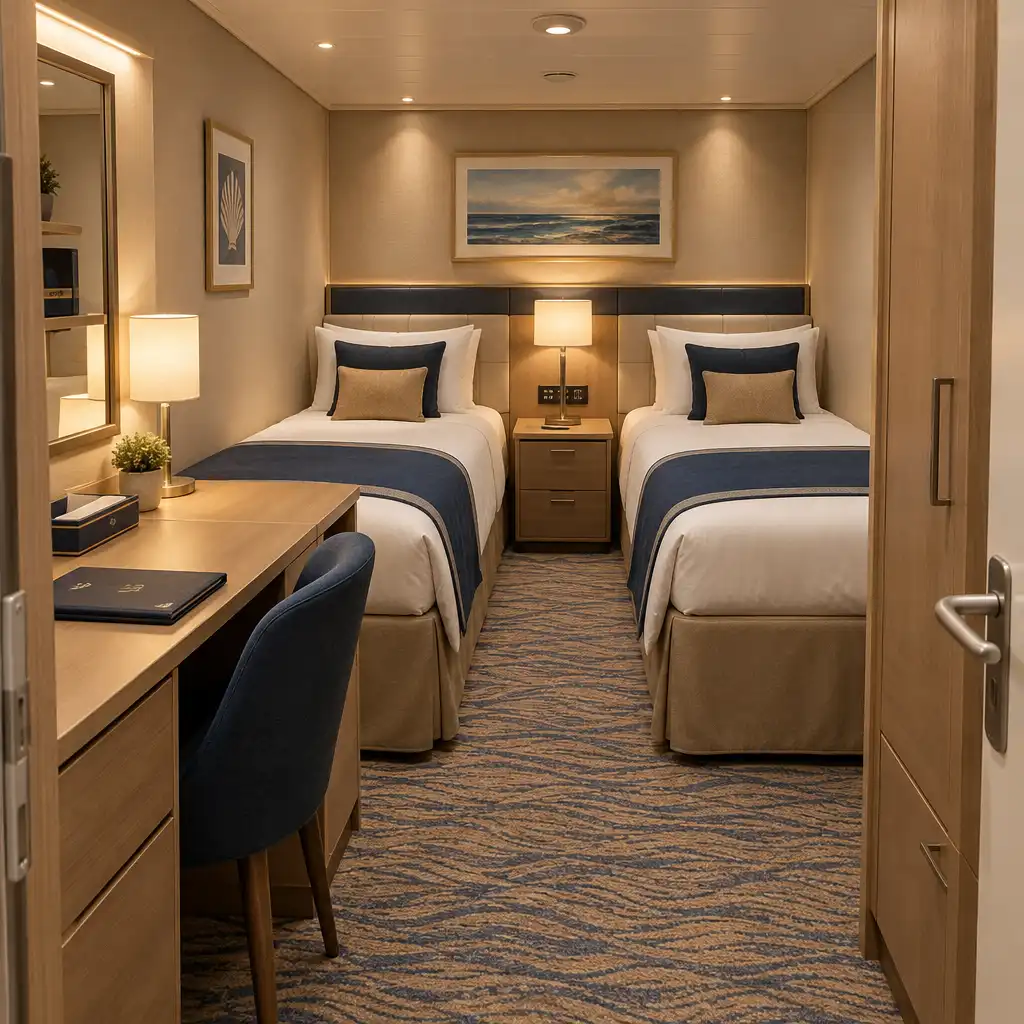
Compact cruise ship interior cabin with twin beds, a small desk and warm ambient lighting

Interior Cabins

Interior cabins are the most economical option, typically without external windows. They offer a cosy, dark environment ideal for sleeping and are often smaller than other categories. For travellers who plan to spend most of their time exploring the ship or ashore, an interior cabin can be a smart way to keep the overall fare down.

Some newer ships compensate for the lack of natural light with virtual windows, ambient lighting or cleverly placed mirrors. Storage and layout still vary, so it is worth checking deck plans rather than assuming every interior is identical.

Ocean-View Cabins

Ocean-view cabins feature a window or porthole with an external view, bringing natural light and a connection to the sea without the cost of a balcony. They are a comfortable middle ground for travellers who want daylight and a sense of place but do not need private outdoor space.

Windows may be large picture windows or smaller portholes, and some views can be obstructed by lifeboats or ship structures. Window size and placement vary by ship and deck, so a carefully chosen ocean-view cabin can feel far more spacious than its square metreage suggests.

Balcony Cabins

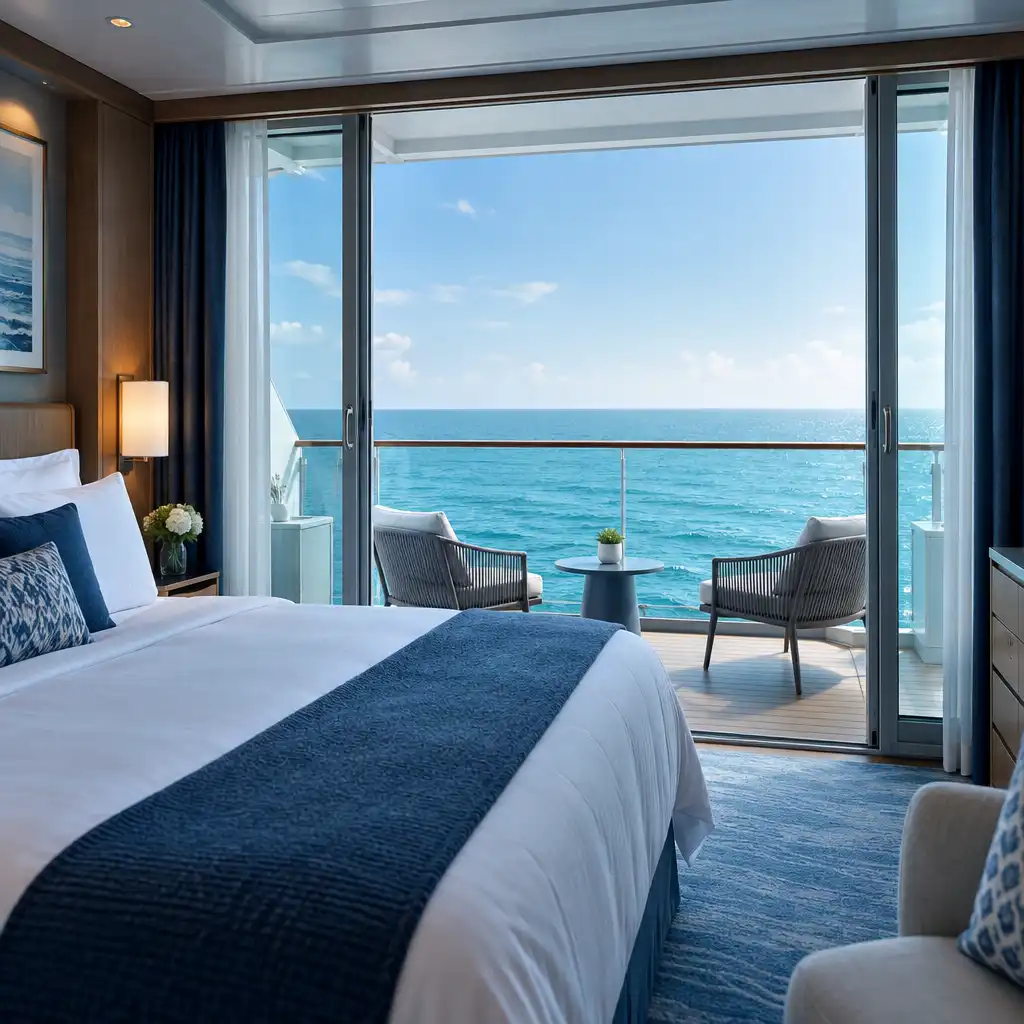
Balcony cabins include a private outdoor balcony, offering fresh air, personal space and ocean views. They are a popular choice for scenic itineraries, slow mornings at sea and travellers who simply want room to breathe without leaving their stateroom.

Balconies vary in size and may be partially enclosed. Consider privacy and wind exposure when choosing a balcony cabin, and remember that not all balcony cabins are identical: some have obstructed views or shallower verandas than the deck plan might imply.

Suites

Suites are the most spacious and premium accommodation, often with separate living areas, enhanced amenities and sometimes exclusive access to lounges or dining venues. They are designed for travellers who want the ship to feel like a hotel rather than a place to sleep.

Amenities vary widely by cruise line and ship. Suites may include butler service, priority boarding and larger balconies, but suite perks are not standardised across all cruise lines. Always check exactly what is included before paying the premium.

Quick Reference

Cabin Comparison at a Glance

The table below summarises typical space, light, view and price positioning for each category. Use it as a starting point, not a guarantee: specific dimensions and amenities vary by ship.

Category Typical Space Natural Light View Price Position
Interior Smallest footprint None or virtual No external view Lowest
Ocean-View Moderate Window or porthole External, possibly obstructed Mid-range
Balcony Larger Full-height doors Private outdoor outlook Higher
Suite Largest Multiple windows or doors Premium outlook Highest

Position Matters

Location, Deck, and Accessibility

Where your cabin sits on the ship can matter as much as its category. Deck position, surrounding venues and accessible design all influence comfort, quiet and convenience.

Deck Position and Motion

Lower decks near the ship's centre experience less motion, while higher decks offer better views but may feel more movement. Choose based on your sensitivity to seasickness. Midship cabins are generally more stable, while forward and aft cabins may have more motion. Remember that motion varies by ship size and sea conditions, so a stable cabin on a small ship can still move more than a high cabin on a large modern vessel.

Noise Considerations

Cabins near lifts, stairs, theatres or pool decks may experience more noise. Consider what is above, below and beside your cabin before booking. Check deck plans for public areas above or below, and be especially cautious of cabins under the buffet or pool deck, which can be noisy early in the morning. Noise levels vary by ship design and insulation, so reviews from recent passengers can be useful.

Accessible Cabins

Accessible cabins are designed for passengers with mobility needs, featuring wider doorways, roll-in showers and grab bars. Availability is limited, so book early and request an accessible cabin at the time of booking. Features vary by cruise line and ship, and not all ships have the same accessible features. If you have specific requirements, contact the cruise line or your travel adviser before confirming.

Tailored Advice

Choosing for Your Travel Style

The best cabin depends on who is travelling and what you want from the voyage. These suggestions offer a starting point, but personal preference always wins.

Couples

Couples often prefer balcony cabins for private outdoor moments and romantic views. A balcony turns the sea into a shared space for breakfast, sunset watching or simply sitting quietly together. Consider a suite for special occasions or longer voyages, when extra space and amenities can make the trip feel more celebratory. Preferences vary, so no single cabin type is best for all couples.

Families

Families may need connecting cabins, family suites or cabins near kids' clubs. Consider space, storage and proximity to family-friendly facilities when comparing options. Connecting cabins allow privacy with easy access, while some ships offer family suites with bunk beds or convertible sofas. Family cabin configurations vary by cruise line, so check the deck plan carefully before booking.

Solo Travellers

Solo travellers may choose interior cabins for value or studio cabins designed for one. Some cruise lines offer solo-friendly pricing or social spaces that make travelling alone feel more connected. Studio cabins are compact but efficient, while interior cabins keep costs down for solo cruisers. Not all ships have dedicated solo cabins, so compare the single supplement against the price of a standard double.

Comfort Seekers

Those prioritising comfort may opt for suites with extra space, upgraded amenities and exclusive areas. Consider the value of perks against the higher cost before committing. Suites may include concierge service and priority access, while balcony cabins offer a middle ground with outdoor space. Suite perks are not standard across cruise lines, so read the inclusions carefully.

Before You Book

Practical Tips for Booking

A little preparation before booking can prevent disappointment later. Work through this checklist as you compare cabins and deck plans.

  • Review deck plans carefully. Look at what is above, below and beside your cabin, not just the category name.
  • Consider your budget honestly. A lower category in a better location can feel better than a higher category in a noisy spot.
  • Prioritise location over category. A midship interior cabin may be more comfortable than a forward balcony for motion-sensitive travellers.
  • Check for obstructed views. Some ocean-view and balcony cabins look directly at lifeboats or structural supports.
  • Book early for the best selection. Accessible cabins, connecting rooms and popular midship balconies sell out quickly.
  • Ask about accessible cabins if needed. Do not assume a standard cabin will meet specific mobility requirements.
  • Consider travel insurance for flexibility. Cabin changes and cancellations can be costly without cover.

Next Step

Plan Your Cruise

Ready to find your perfect cabin? Explore our cruise ship guides or get in touch with our editorial team at [email protected].

Explore Cruise Guides